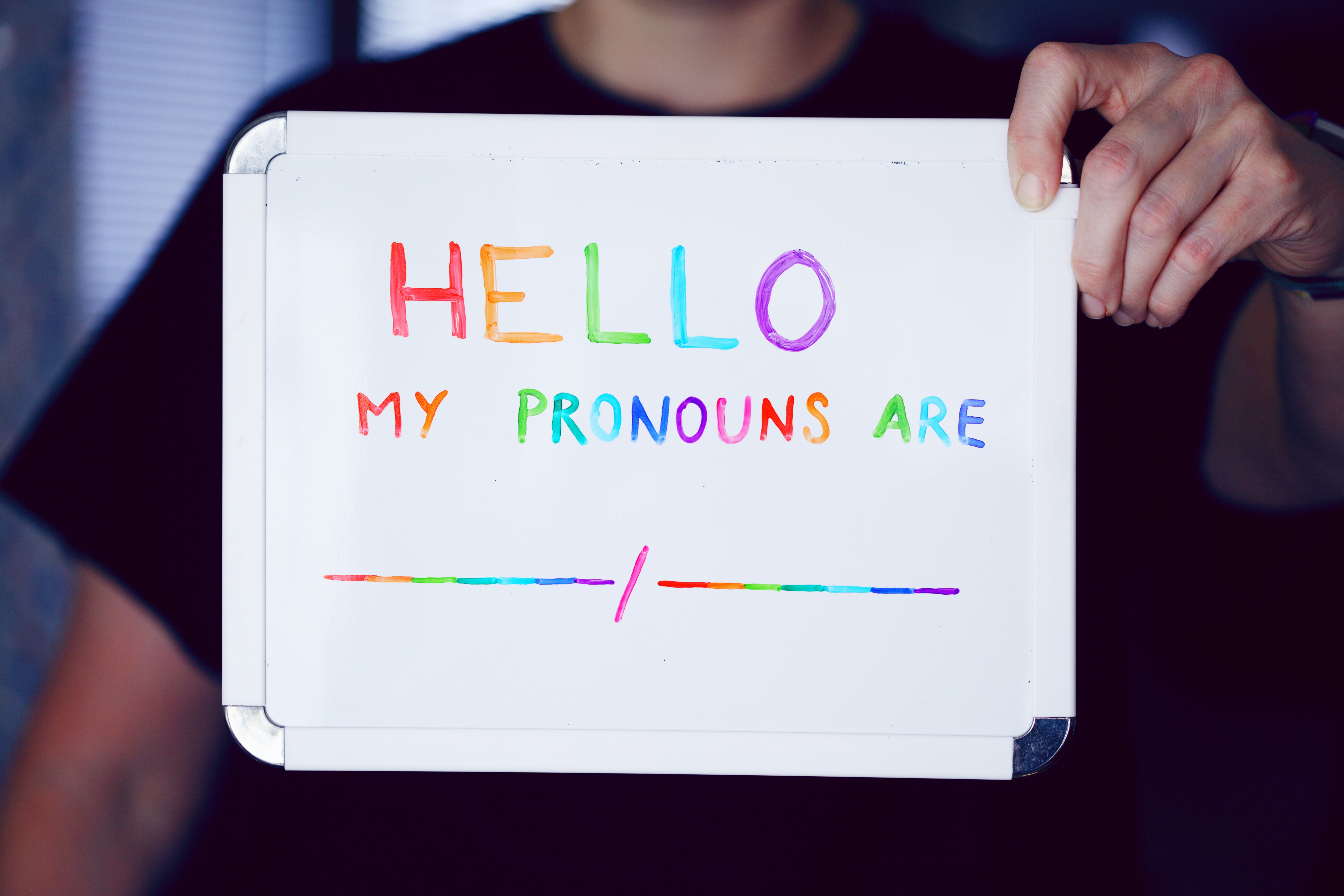
A recent federal appeals court decision upheld a Maryland school district’s policy requiring teachers to use transgender students’ names and pronouns, even when a teacher objected on religious grounds. This ruling could be cited in similar cases nationwide, including in Texas.
Here's what happened and what it may mean for the Fort Bend County LGBTQIA+ community.
The Case: Teacher Challenges Pronoun Policy
Kimberly Polk worked as a substitute teacher in Montgomery County, Maryland, the state's largest school district, starting in 2021. The district's policy requires educators to use students' chosen names and pronouns consistent with their gender identity.
In November 2022, Polk requested a religious accommodation, saying that using pronouns inconsistent with a student’s sex at birth conflicted with her Christian beliefs. District officials explored options like limiting her to preschool and elementary school classes or arranging for others to interact with transgender students, but they ultimately declined to grant an accommodation a month later.
Polk stopped taking substitute assignments and filed a lawsuit in 2024, claiming the policy violated her First Amendment rights to free speech and religious freedom. She requested permission to teach only in classrooms without transgender students.
Both the district court and the Fourth Circuit Court of Appeals denied her requests.
The Court's Reasoning
The appeals court's 2-1 decision centered on a key point: using students' pronouns is part of a teacher's job responsibilities, not their personal speech.
Judge Robert B. King, writing for the majority, explained: "How a teacher addresses a particular student in a particular classroom...is merely a part of that teacher's job description." When teachers work in public schools, they agree to follow the school board's policies—including pronoun policies.
The court's main points:
- The policy applies to all teachers equally and doesn't single out religious individuals
- School boards, not individual teachers, set educational policies
- No one was forced to become a substitute teacher in Montgomery County
Judge J. Harvie Wilkinson III dissented, arguing the policy restricts free speech. However, he was outvoted by judges appointed by Presidents Clinton and Obama.
Polk's attorney said they may appeal to the Supreme Court or request review by the full Fourth Circuit.
What This Means for Texas
This case happened in Maryland, but it has implications beyond that state. The decision came from the 4th Circuit, whose rulings govern federal courts in Maryland, Virginia, North Carolina, South Carolina, and West Virginia. Texas is in the 5th Circuit, so this ruling does not control what courts must do here, but judges and lawyers can still cite it as persuasive authority in similar disputes.
That means that, in future Texas cases over school pronoun policies, attorneys may point to the Polk decision as an example of a federal appeals court treating pronoun use as part of a teacher’s job and upholding a district’s authority to enforce an inclusive policy. How a Texas court would ultimately rule would depend on our circuit’s precedents, state laws, and the specific facts of any local policy.
How Pronouns Protect Mental Health
Using a Trans student's correct name and pronouns has documented mental health benefits. Research shows it's associated with lower rates of depression and suicide among trans youth. According to a 2022 Washington Post poll, school is one of the most stressful environments for transgender students.
When schools create inclusive environments that respect students' identities, the impact on student wellbeing can be significant.
The Bigger Picture
Texas has a different political landscape than Maryland. While this Fourth Circuit ruling doesn't directly control what happens in Texas, it provides insight into how federal courts are approaching these issues.
The timing is significant. This decision comes as the Trump administration is taking a more aggressive stance against school districts that adopt policies supporting Trans students, especially around bathrooms and other facilities. The U.S. Department of Education has recently investigated and threatened to restrict funding for districts that let Trans students use restrooms matching their gender identity, or that convert sex‑segregated bathrooms into all‑gender facilities, arguing that these policies violate federal sex‑discrimination rules.
There have also been major changes in how federal courts interpret Title IX, the law that bans sex discrimination in schools that receive federal funding. In 2024, the Biden administration issued new Title IX regulations that explicitly treated discrimination based on gender identity and sexual orientation as a form of sex discrimination, but in early 2025 a federal trial court struck down that rule. In doing so, the judge said the Department of Education had gone beyond what Congress allowed and that, as written, Title IX does not clearly cover gender identity, effectively rolling back federal protections for transgender students.
For LGBTQIA+ families and students in Fort Bend County, the ruling in Polk v. Montgomery County Board of Education suggests several things:
- Some federal courts are willing to uphold school policies that require staff to use students’ names and pronouns consistent with their gender identity.
- Constitutional religious‑freedom and free‑speech claims do not automatically override those policies, at least when the policy is neutral and applied to all employees as part of their job duties.
- Future outcomes in Texas will depend on how our courts interpret similar issues, but advocates here can look to Polk as one model of a court affirming a district’s authority to protect transgender students.
This decision is, of course, not the final word nationwide. But for the Fort Bend County LGBTQIA+ community, it can be viewed as an important example of a federal appeals court recognizing schools’ power to support Trans students.